Italian Food Seamless Patterns Handpaint: Elevating Design with Authentic Artistry
In the realm of digital design and textile creation, the demand for authentic, high-quality visual assets has never been higher. Among the most sought-after categories are Italian food seamless patterns handpaint collections. These intricate designs bridge the gap between traditional culinary artistry and modern digital utility, offering creators a versatile toolkit for projects ranging from home decor to commercial packaging. The allure of Italian cuisine is universal, evoking feelings of warmth, tradition, and indulgence. When translated into seamless digital patterns through hand-drawn and hand-painted techniques, these motifs become more than just images; they become textures that tell a story.
This article explores the profound value of incorporating hand-painted Italian food illustrations into various creative workflows. We will examine the technical specifications that make these files indispensable for professionals, the diverse applications across industries, and the specific advantages of using raster-based, high-resolution assets over generic vector graphics. Whether you are a graphic designer seeking unique textures for a brand identity or a hobbyist looking to add a personal touch to scrapbooking, understanding the nuances of these digital assets is crucial for achieving professional results.
The Aesthetic Appeal of Hand-Painted Culinary Motifs
What distinguishes Italian food seamless patterns handpaint from mass-produced clip art is the inherent imperfection and organic flow of the brushstrokes. In an era dominated by clean lines and perfect geometric vectors, there is a growing appreciation for the tactile quality of hand-drawn elements. When an artist paints a basil leaf, a slice of prosciutto, or a cluster of grapes, each stroke carries intention and variation. This human element translates into digital files as subtle gradients, soft edges, and natural color variations that mimic real-world materials.
For designers working on kitchen textiles, wallpaper, or fabric prints, this authenticity is paramount. Consumers today are increasingly drawn to products that feel "crafted" rather than "manufactured." A seamless pattern featuring hand-painted pasta shapes or rustic bread loaves adds a layer of sophistication and warmth to any surface. The visual weight of these illustrations allows them to serve as focal points in interior design while maintaining a cohesive look when tiled repeatedly. The key lies in the balance between detailed illustration and the negative space provided by the light or dark backgrounds, ensuring that the pattern remains readable and aesthetically pleasing at various scales.
Technical Specifications and File Versatility
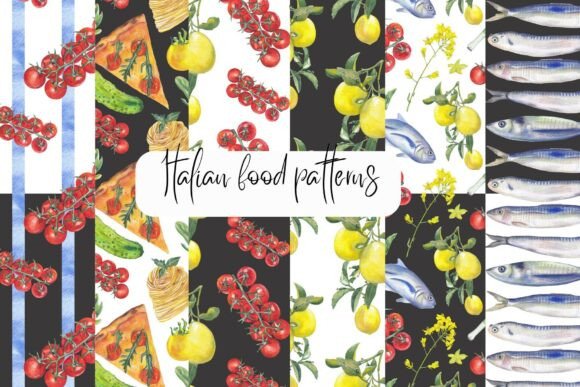
To fully leverage the potential of these digital assets, it is essential to understand their technical composition. A premium collection of Italian food seamless patterns handpaint typically includes a comprehensive suite of file formats designed to accommodate different software requirements and printing needs. The standard offering often consists of 18 high-resolution files, providing maximum flexibility for the user.
- Resolution and Clarity: Each pattern is delivered at a substantial size of 4000x4000 pixels with a resolution of 300 dpi (dots per inch). This density ensures that when the pattern is printed on large-format items such as wallpapers or wide fabric bolts, the image remains crisp and free of pixelation. For web use, these files can be easily resized without significant loss of quality.
- Background Variations: The inclusion of both light and dark background versions is a critical feature. Light backgrounds offer a fresh, airy feel suitable for spring-themed recipes, summer table linens, or bright greeting cards. Conversely, dark backgrounds provide a dramatic, elegant contrast that works exceptionally well for wine labels, upscale restaurant menus, or evening wear fabrics. This duality allows a single purchase to serve multiple branding palettes.
- Transparency Options: Six PNG files with transparent backgrounds are included, which is particularly valuable for designers who need to overlay the food illustrations onto custom colored backgrounds or composite them into complex layouts. This eliminates the need for tedious manual cutting out in software like Photoshop, saving hours of workflow time.
By receiving six distinct seamless patterns in three different background treatments, users gain a total of 18 unique visual assets. This variety prevents monotony in long projects and allows for mixing and matching styles within a single design system.
Practical Applications Across Industries
The versatility of Italian food seamless patterns handpaint extends far beyond simple decoration. These assets are functional tools that solve specific design problems across various sectors. Below are some of the most common and effective use cases.
Kitchen Textiles and Home Decor
One of the primary markets for these patterns is the home textile industry. Manufacturers of curtains, upholstery fabrics, napkins, and placemats require designs that are durable in appearance and timeless in style. Hand-painted Italian motifs, such as olive branches, tomatoes, and herbs, evoke a Mediterranean lifestyle that resonates with homeowners. Because the patterns are seamless, they can be tiled infinitely, allowing manufacturers to produce continuous rolls of fabric without visible breaks. The high resolution ensures that the fine details of the hand-painting are preserved even after the fabric is dyed and woven.
Packaging and Branding
For small businesses in the food industry, packaging is a critical touchpoint. A jar of artisanal pasta sauce, a box of gourmet biscuits, or a bag of dried herbs can be elevated with custom wrapping paper or direct print designs. Using Italian food seamless patterns handpaint provides a ready-made aesthetic that communicates quality and tradition. Brands can use the light background versions for a clean, minimalist look, or the dark backgrounds for a premium, luxury feel. The transparency options allow for logo placement directly over the illustrations, creating a unified brand identity.
Print Media and Stationery
Editors and publishers frequently seek unique textures for cookbooks, recipe blogs, and food magazines. Instead of using stock photography, which can sometimes feel generic, editors may choose to integrate hand-painted seamless patterns as section dividers, page borders, or full-page backgrounds. Greeting card designers also benefit greatly from these assets. An invitation for a wedding reception with an Italian theme, or a holiday card featuring festive food illustrations, gains character and charm from the hand-drawn nature of the patterns. Scrapbookers and planners use these images to create themed layouts, adding a personal and artistic flair to memory keeping.
Digital and Web Design
In the digital space, texture plays a vital role in user experience. Web designers might use a subtle version of an Italian food pattern as a background for a restaurant’s website or a cooking class landing page. The 300 dpi source files ensure that the textures look sharp on high-density displays (Retina screens). Furthermore, educators and content creators can use these illustrations in online courses about Italian cuisine, making the learning material visually engaging and culturally immersive.
Advantages Over Vector-Based Alternatives
While vector graphics (SVG/EPS) are popular for their scalability, they often lack the nuanced texture of hand-painted art. Italian food seamless patterns handpaint rely on raster data that captures the interaction of paint, paper, and brush. This results in a softer, more organic look that is difficult to replicate with pure vectors. For applications where realism and artistic depth are prioritized over sharp, geometric precision, raster-based hand-painted patterns are superior.
Additionally, the preparation time for these assets is significantly reduced for the end-user. Creating a seamless pattern from scratch requires not only artistic skill but also technical proficiency in tiling algorithms and edge matching. By purchasing pre-made, professionally tiled patterns, designers bypass the trial-and-error process. They receive files that are guaranteed to tile correctly, allowing them to focus on the overall composition and layout of their project rather than the mechanics of the pattern itself.
Considerations for Ethical Use and Licensing
When integrating these digital assets into commercial projects, it is important to respect the intellectual property rights of the creator. Typically, licenses for Italian food seamless patterns handpaint permit the use of the designs in final physical or digital products, such as printed shirts, published books, or sold merchandise. However, a critical restriction usually applies: you cannot resell or redistribute the raw digital files themselves. This means you cannot take the 18 JPG or PNG files and upload them to another marketplace for others to download.
This distinction protects the original artist’s livelihood while empowering buyers to create tangible value. It encourages creativity and application rather than mere duplication. Users should always review the specific license agreement provided with the download to ensure compliance, particularly if they intend to use the patterns in high-volume commercial manufacturing. Understanding these boundaries fosters a healthy ecosystem where artists are compensated for their labor, and consumers receive high-quality, legally safe assets.
Conclusion
The integration of Italian food seamless patterns handpaint into creative projects offers a blend of aesthetic beauty and practical utility. With their high-resolution specifications, varied background options, and transparent layers, these assets provide a robust foundation for designers across multiple disciplines. From enhancing the ambiance of a home with beautiful textiles to elevating the brand presence of a food startup, the applications are vast. By choosing hand-painted illustrations, creators inject a sense of humanity and tradition into their work, connecting with audiences on an emotional level. As the demand for authentic, crafted aesthetics continues to grow, these digital patterns stand out as invaluable resources for anyone looking to bring a taste of Italy into their design repertoire.