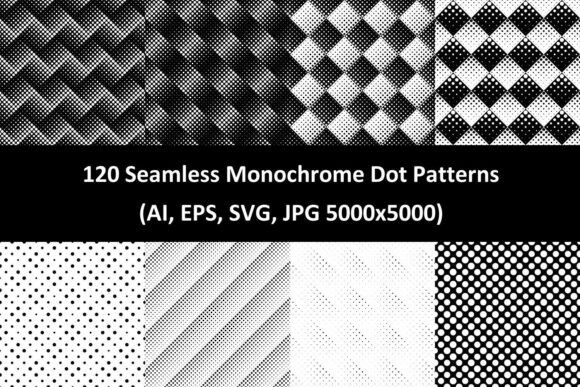
120 Seamless Monochrome Dot Patterns
In an era where visual noise competes for every second of attention, the power of restraint has never been more potent. Designers and brand strategists are increasingly turning away from chaotic, multi-colored complexity in favor of structured, minimalist aesthetics that communicate clarity and sophistication. At the heart of this shift is a timeless graphic element: the dot. Specifically, 120 Seamless Monochrome Dot Patterns offer a versatile toolkit for creators who need to add texture, depth, and professional polish to their projects without overwhelming the core message. This collection is not merely a set of images; it is a comprehensive resource designed to streamline workflows and elevate the visual identity of digital and print media alike.
The relevance of monochrome patterns lies in their adaptability. Whether you are crafting a corporate presentation, designing a mobile app interface, or preparing marketing materials for a small business, these patterns provide a subtle layer of interest that guides the eye without distracting from the content. The "seamless" nature of these files ensures that they can be tiled infinitely across any surface, making them ideal for backgrounds, textures, and decorative borders. By utilizing high-quality vector assets, creators can scale these designs from tiny icons to massive billboards without losing resolution, a critical requirement in today’s multi-platform publishing landscape.
The Evolution of Minimalist Texture
Graphic design trends have cycled through various phases, from the brutalist rawness of the early 2010s to the glassmorphism and neon gradients of the late 2010s. However, as users become fatigued by overly stylized and heavy visual effects, there is a noticeable return to foundational geometric forms. Monochrome dots represent a bridge between pure minimalism and functional texture. They are simple enough to remain neutral but complex enough to add character.
This evolution reflects a broader change in user expectations. Modern audiences, particularly those aged 20 to 50, value authenticity and efficiency. A cluttered interface or a busy background suggests disorganization, whereas a clean, well-structured pattern implies precision and care. For professionals in tech, finance, and education, this psychological association is vital. Using 120 Seamless Monochrome Dot Patterns allows businesses to project stability and professionalism. It signals that the brand respects the user’s time and cognitive load by keeping the visual environment calm and focused.
Furthermore, the rise of remote work and digital collaboration has changed how we consume content. Screens are now our primary windows to the world, and screen fatigue is a real concern. High-contrast, low-complexity patterns help reduce visual strain while maintaining engagement. The shift toward dark mode interfaces, which often utilize subtle dot grids or noise textures, underscores this preference. These patterns are no longer just decorative; they are functional tools for enhancing readability and user experience (UX).
Technical Advantages of Vector-Based Assets
When sourcing design elements, the file format is just as important as the visual style. The inclusion of multiple formats in this package—specifically AI, EPS, SVG, and JPG—addresses the diverse needs of different creative workflows. Understanding the distinction between these formats is crucial for maximizing the utility of 120 Seamless Monochrome Dot Patterns.
- AI and EPS Files: As native Adobe Illustrator formats, these are essential for professional designers. They allow for non-destructive editing, meaning you can adjust the size of individual dots, change spacing, or modify opacity directly within the software. This flexibility is invaluable when tailoring a pattern to fit a specific brand guideline or layout constraint.
- SVG Files: Scalable Vector Graphics are the gold standard for web design. Because SVGs are code-based, they load quickly and remain crisp at any screen resolution. For bloggers, developers, and UI/UX designers, embedding SVG patterns ensures that websites look sharp on everything from mobile phones to 4K monitors, contributing to better Core Web Vitals and overall site performance.
- JPG RGB Files: For those working in raster-based programs like Photoshop or Canva, or for quick mockups, the 5000x5000px JPG files provide immediate usability. The high resolution ensures that even large-scale prints, such as banners or trade show displays, will appear smooth and free of pixelation.
This multi-format approach eliminates the friction often associated with asset management. Instead of searching for converters or dealing with compatibility issues, creators can jump straight into production. This efficiency is particularly beneficial for freelancers and agency teams managing tight deadlines across various client projects.
Practical Applications Across Industries
The versatility of monochrome dot patterns extends far beyond simple background decoration. Here is how different professionals can leverage this resource to enhance their output.
Marketing and Branding
For marketers, consistency is key. Monochrome patterns serve as excellent brand accents. Imagine a social media campaign where each post uses a slightly different dot density from the same family, creating a cohesive yet dynamic feed. Or consider packaging design, where a subtle dot texture adds tactile appeal to otherwise plain boxes. In email marketing, these patterns can be used as section dividers or behind call-to-action buttons to draw attention without using loud colors that might clash with the brand palette.
Education and E-Learning
Educators and instructional designers face the challenge of keeping learners engaged over long periods. Text-heavy slides or documents can become tedious. Integrating 120 seamless monochrome dot patterns into PowerPoint presentations, PDF worksheets, or online course modules breaks up the monotony. Subtle geometric backgrounds can help structure information hierarchically, guiding students’ eyes to key points. For instance, a dense dot pattern might highlight a summary section, while a sparse pattern could serve as a gentle backdrop for introductory text.
Web and App Development
Developers often struggle to balance aesthetic appeal with performance. Heavy image assets can slow down page loads. SVG dot patterns offer a lightweight solution. They can be used to create custom cursor effects, loading animations, or interactive hover states. For example, a grid of dots that expands or changes opacity when a user hovers over a link provides immediate, satisfying feedback. This level of micro-interaction enhances the perceived quality of the application, fostering a sense of polish and attention to detail.
Print and Editorial Design
In the physical realm, texture translates differently than on screen. Print designers use dot patterns to add depth to business cards, letterheads, and brochures. When printed, these patterns can interact with paper stock, creating a premium feel. For bloggers and writers, these patterns can be used to illustrate articles about technology, data, or connectivity, providing relevant visual metaphors without requiring custom illustration work.
Strategic Implementation Tips
To get the most out of this collection, it is important to apply these patterns strategically rather than indiscriminately. Overuse can lead to visual clutter, defeating the purpose of minimalism. Here are some best practices for integration:
- Maintain Contrast: Ensure there is sufficient contrast between the pattern and the foreground content. If the pattern is light gray on white, ensure text is dark enough to be legible. Accessibility should always be a priority.
- Control Opacity: One of the greatest strengths of vector files is the ability to adjust transparency. Lowering the opacity of a dot pattern can turn it into a subtle watermark or texture, allowing it to support rather than dominate the design.
- Match Density to Purpose: Use denser patterns for areas that need emphasis or separation, and sparser patterns for expansive backgrounds. This variation creates rhythm and visual interest throughout a document or website.
- Consider Color Variations: While the package focuses on monochrome, remember that these patterns can be recolored to match any brand palette. The structural integrity of the dot grid remains constant, but the color choice can shift the mood from serious and corporate to playful and energetic.
Conclusion
The demand for high-quality, adaptable design resources continues to grow as the volume of digital content increases. 120 Seamless Monochrome Dot Patterns addresses this need by providing a robust, technically sound, and aesthetically pleasing solution. By combining timeless design principles with modern file formats, this package empowers creators to produce work that is both beautiful and functional.
Whether you are a seasoned graphic designer looking to speed up your workflow, a marketer aiming to refine your brand’s visual voice, or a freelancer seeking to add value to your client deliverables, these patterns offer a practical advantage. They represent a smart investment in design infrastructure, enabling you to focus on strategy and storytelling while the visual details handle themselves with precision. In a market that rewards clarity and efficiency, mastering the use of simple, effective elements like monochrome dots is a skill that pays dividends in every project.